
JOHN SMITH //
JOHN SMITH //
John Smith (1952), one of the most emblematic filmmakers of the post-war British avant-garde, is a creator distinguished by an exceptionally lively, subtly humorous attention to film and its materiality. In his extensive oeuvre of more than sixty works, intertwining the fields of cinema, video and gallery installations, he challenges the relations between word, sound and image with an always playful approach.
While studying at the Royal College of Art, Smith became an active member of the London Film-Makers' Co-op (today LUX), which, especially in the 1970s, was expressly oriented towards a structural-materialist approach to film, an influence that, to some extent, is still reflected in his work.
But as a filmmaker, Smith does not like to be pigeonholed – the diversity of his approach can be observed already in his early films, such as Association (1975), Leading Light (1975) and his cult work The Girl Chewing Gum (1976). If, in films like Association, he represents the Godardian principle of playing with the dialectical relationship between word and image through a tense foregrounding of montage, then, in Leading Light, he comes closer to exploring the impressionistic contingencies of a place familiar to him through longer exposures of the camera-eye. Both lines are connected by an emphasised positioning of the subjective gaze of the filmmaker himself, who also becomes an active protagonist in his later works – not only with his voiceover but also with his image (for example, in Regression [1998–1999] or Being John Smith [2024]).
One of the common threads running through Smith’s oeuvre is his attitude to the everyday, finding stories in the most ordinary, even invisible banalities of the living and, even more often, the non-living nature in his surroundings. Smith mostly draws inspiration from the visual impressions of his native East London – sometimes a look out the window suffices, like in The Black Tower (1985–1987) or Blight (1994–1996). At other times, he is inspired by found objects and images, which, in one way or another – mostly by accident as one of the main factors in his creative process – find their way into the range of his cinema-eye, like in unusual Red cardigan (2011), Steve Hates Fish (2015) or the series Hotel Diaries (2001–2007). Smith is a man with a movie camera, one of those filmmakers who, in a telling and playful gesture echoing Agnès Varda, never let go of their camera – be it 8mm or digital and today even a mobile phone – as the key extension of their gaze.
The two programmes bring a cross-section of Smith’s extensive oeuvre and emphasise the filmmaker’s diverse exploration of film and video forms, but above all highlight his attention to the social environment through a bricolage of created and found images, which, in an often humorous address, repeatedly engage, surprise or awaken from distraction the gaze of their audience.
“For me, the films that are most interesting are the ones that in some way invent their own language. If you are inventing a language in a film people need to be able to learn to understand it. So the film actually has to teach people a language, and you can only do that if what you do is economical, and avoids misleading elements. It is similar to the way in which children learn, for example, through mistakes and repetition.” - John Smith
Anja Banko
Leading Light
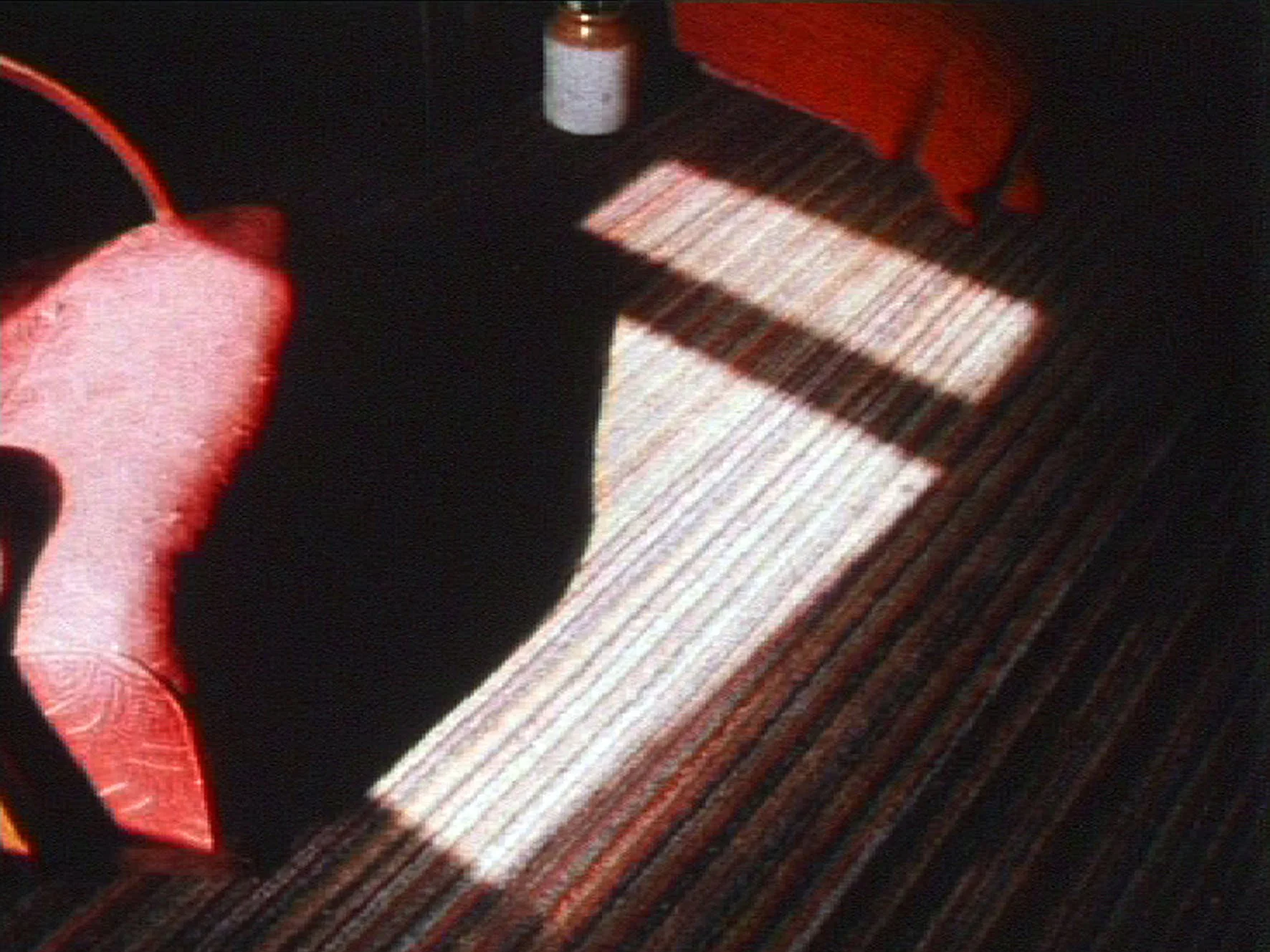
John Smith, Great Britain, 1975, 16 mm, 1.37, colour, 11', no dialogue
“John Smith’s Leading Light evolves a sense of screen depth and surface through the simple agency of light. The film is shot in a room over a period of a day and records the changes in light through the single window. The image is controlled through manipulation of aperture, of shutter release, of lens, but the effect is more casual than determined and the spectator is aware primarily of the determining nature of following sunlight.” - Deke Dusinberre ‘Perspectives on British Avant-Garde Film’ catalogue 1977
Om

John Smith, Great Britain, 1986, 16 mm, 1.37, colour, 4', no dialogue
“This four minute film explores our response to stereotypes – aural, visual and ideological. Smith signals these stereotypes to the viewer through a chiefly associational system, which deftly manipulates the path of our expectations. The structure is stunningly simple and deceptively subtle. We are taken on a journey from one concrete stereotype to its diametric opposite, as images transform and juxtapose to, ultimately, invert our interpretation of what we see and hear.” - Gary Davis
Association
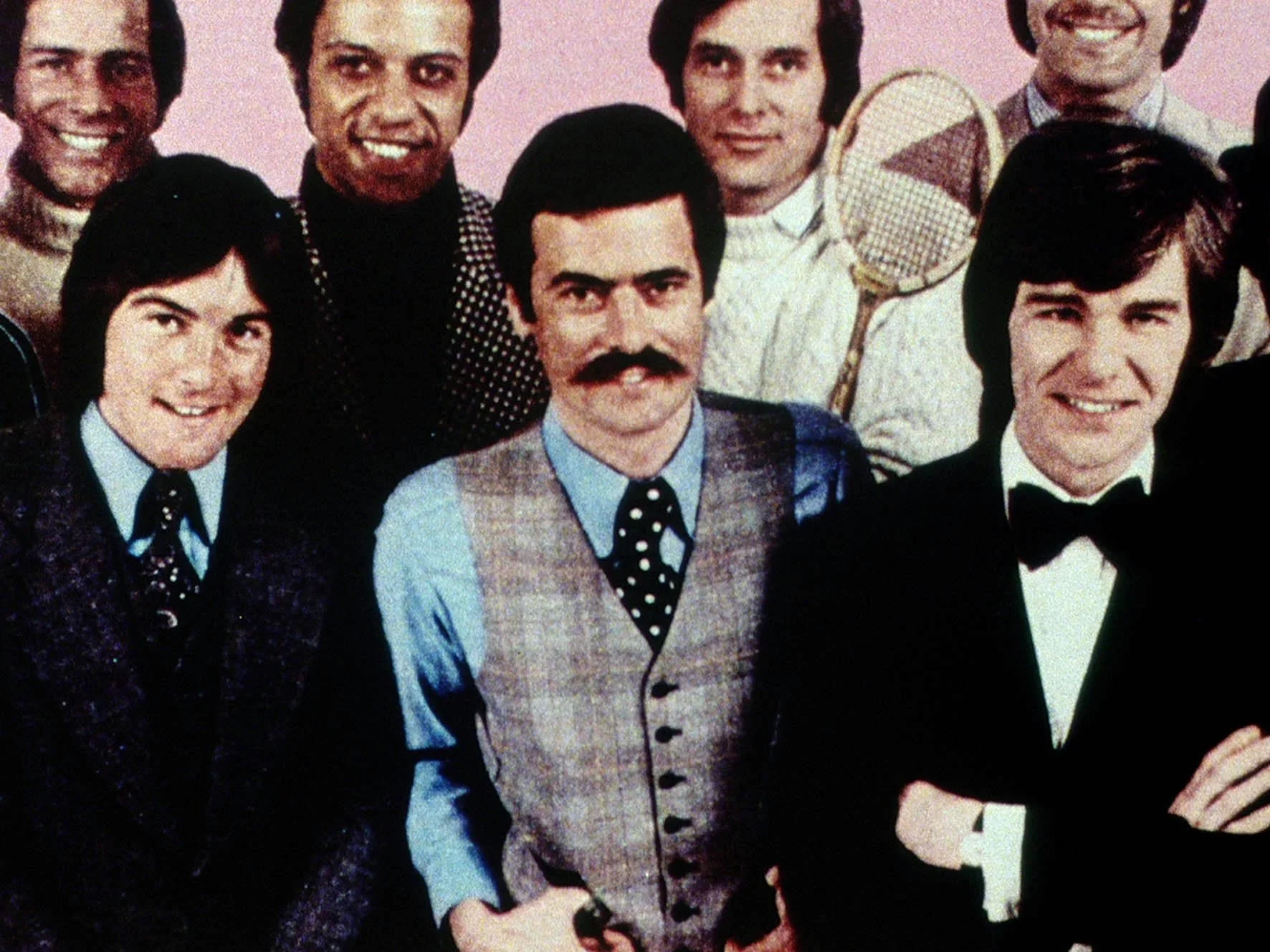
John Smith, Great Britain, 1975, 16 mm, 4:3, colour, 6'30'', Slovenian video subtitles
Images from magazines and colour supplements accompany a spoken text taken from Word Associations and Linguistic Theory by the American psycholinguist Herbert H. Clark. By using the ambiguities inherent in the English language, Associations sets language against itself. Image and word work together/against each other to destroy/create meaning.
The Girl Chewing Gum
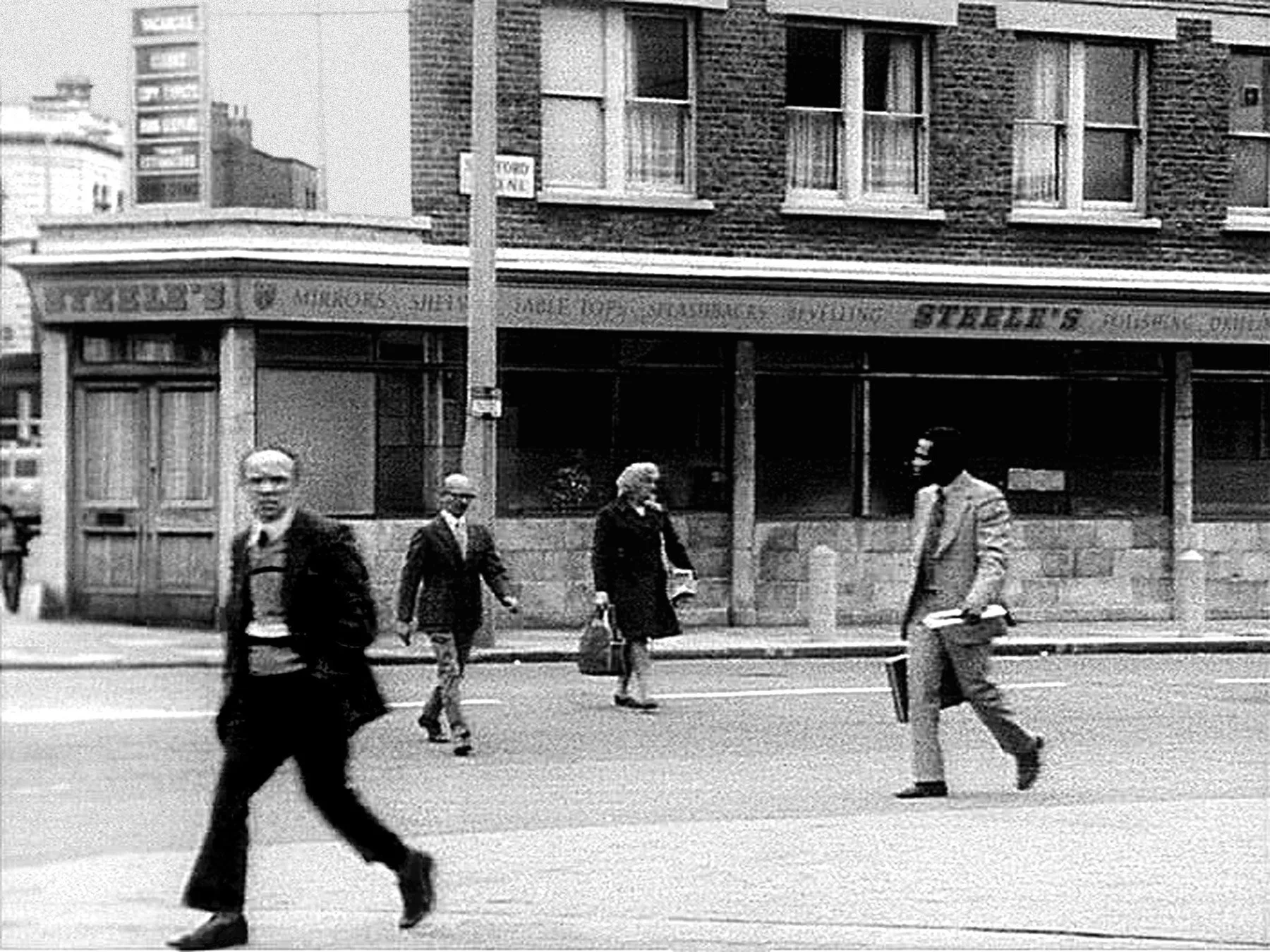
John Smith, Great Britain, 1976, 16 mm, 1.37, black&white, 12', Slovenian video subtitles
“I am writing this with a black ‘Tempo’ fibre-tip pen. A few months ago, I bought fifteen of these pens for sixty pence. Unfortunately, because they are so common, other people pick them up, thinking they are theirs. I bought the pens from a market in Kingsland Road in Hackney, about a hundred yards from where the film was shot. The film draws attention to the cinematic codes and illusions it incorporates by denying their existence, treating representation as absolute reality.” - John Smith, 1976
Gargantuan
John Smith, Velika Britanija, 1992, 16 mm, 1.37, colour, 1'27'', Slovenian video subtitles
"A wonderful and witty example of what it can be to have a pillowtalk with a small amphibian." - Elaine Paterson, Time Out, 1992
The Black Tower
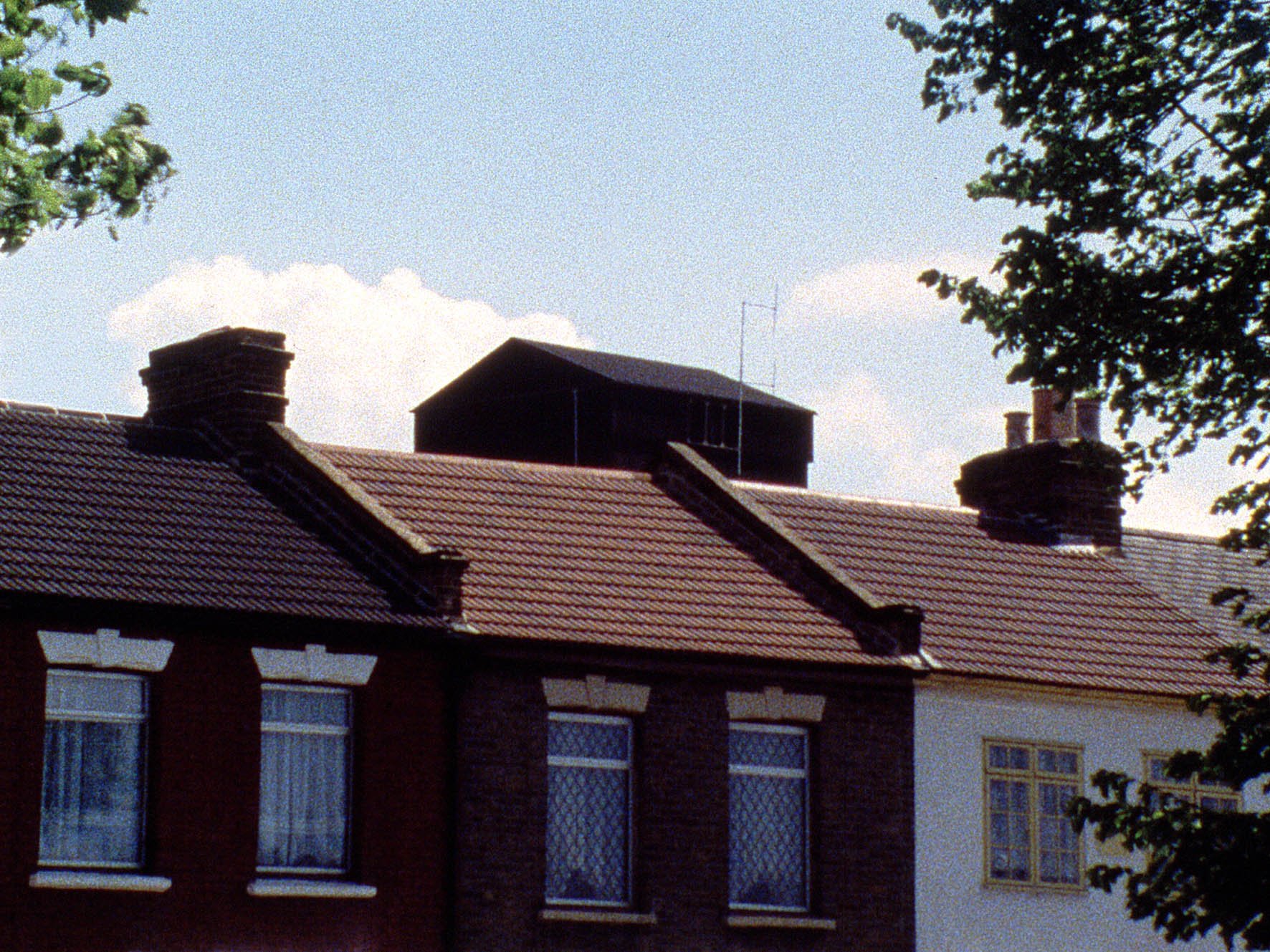
John Smith, Great Britain, 1985–87, 16 mm, 1.37, colour, 23'10'', Slovenian video subtitles
“In The Black Tower we enter the world of a man haunted by a tower which, he believes, is following him around London. While the character of the central protagonist is indicated only by a narrative voice-over which takes us from unease to breakdown to mysterious death, the images, meticulously controlled and articulated, deliver a series of colour coded puzzles, jokes and puns which pull the viewer into a mind-teasing engagement. Smith’s assurance and skill as a filmmaker undercuts the notion of the avant-garde as dry, unprofessional and dull and in The Black Tower we have an example of a film which plays with the emotions as well as the language of film.” - Nik Houghton, Independent Media 1987
Regression

John Smith, Great Britain, 1998–99, digital format (shot on SD), 4:3, colour, 17', Slovenian video subtitles
"John Smith is not afraid of time. His films continuously show of his patience in setting up a visual pun, filming certain angles over several days or months in order to develop our sense of place and flux. Regression makes time a focus of his humour. As he recreates a film he made twenty-one years earlier, he tapes each of the twelve days of Christmas, getting progressively younger as he replays the chorus of the accompanying song. In a sense, it is this youthful humour mixed with the political wisdom of age and an unflagging patience that makes John Smith’s films unique - they are not quick jokes, but elaborate latticeworks of humour." - Chris Kennedy, programme notes for screening at Pleasure Dome, Toronto, 2001
Screening in the presence of the author.
ABOUT THE AUTHOR:

John Smith (1952) studied film at the Royal College of Art. Inspired during his formative years by conceptual art and structural film, but also fascinated by the immersive power of narrative and the spoken word, he has developed a body of work that deftly subverts the perceived boundaries between documentary, fiction, representation and abstraction. Smith's work has been widely shown in independent cinemas and art galleries around the world and awarded major prizes at many international film festivals. His work is held in numerous collections including Tate Gallery,London; Arts Council England; Museum of Modern Art, New York; Museum Sztuki, Lodz; Ville de Genève, Switzerland and Kunstmuseum Magdeburg, Germany. John Smith is Emeritus Professor of Fine Art at the University of East London. He lives and works in London and Aude.