
JOHN SMITH //
JOHN SMITH //
John Smith (1952), one of the most emblematic filmmakers of the post-war British avant-garde, is a creator distinguished by an exceptionally lively, subtly humorous attention to film and its materiality. In his extensive oeuvre of more than sixty works, intertwining the fields of cinema, video and gallery installations, he challenges the relations between word, sound and image with an always playful approach.
While studying at the Royal College of Art, Smith became an active member of the London Film-Makers' Co-op (today LUX), which, especially in the 1970s, was expressly oriented towards a structural-materialist approach to film, an influence that, to some extent, is still reflected in his work.
But as a filmmaker, Smith does not like to be pigeonholed – the diversity of his approach can be observed already in his early films, such as Association (1975), Leading Light (1975) and his cult work The Girl Chewing Gum (1976). If, in films like Association, he represents the Godardian principle of playing with the dialectical relationship between word and image through a tense foregrounding of montage, then, in Leading Light, he comes closer to exploring the impressionistic contingencies of a place familiar to him through longer exposures of the camera-eye. Both lines are connected by an emphasised positioning of the subjective gaze of the filmmaker himself, who also becomes an active protagonist in his later works – not only with his voiceover but also with his image (for example, in Regression [1998–1999] or Being John Smith [2024]).
One of the common threads running through Smith’s oeuvre is his attitude to the everyday, finding stories in the most ordinary, even invisible banalities of the living and, even more often, the non-living nature in his surroundings. Smith mostly draws inspiration from the visual impressions of his native East London – sometimes a look out the window suffices, like in The Black Tower (1985–1987) or Blight (1994–1996). At other times, he is inspired by found objects and images, which, in one way or another – mostly by accident as one of the main factors in his creative process – find their way into the range of his cinema-eye, like in unusual Red cardigan (2011), Steve Hates Fish (2015) or the series Hotel Diaries (2001–2007). Smith is a man with a movie camera, one of those filmmakers who, in a telling and playful gesture echoing Agnès Varda, never let go of their camera – be it 8mm or digital and today even a mobile phone – as the key extension of their gaze.
The two programmes bring a cross-section of Smith’s extensive oeuvre and emphasise the filmmaker’s diverse exploration of film and video forms, but above all highlight his attention to the social environment through a bricolage of created and found images, which, in an often humorous address, repeatedly engage, surprise or awaken from distraction the gaze of their audience.
“For me, the films that are most interesting are the ones that in some way invent their own language. If you are inventing a language in a film people need to be able to learn to understand it. So the film actually has to teach people a language, and you can only do that if what you do is economical, and avoids misleading elements. It is similar to the way in which children learn, for example, through mistakes and repetition.” - John Smith
Anja Banko
Record
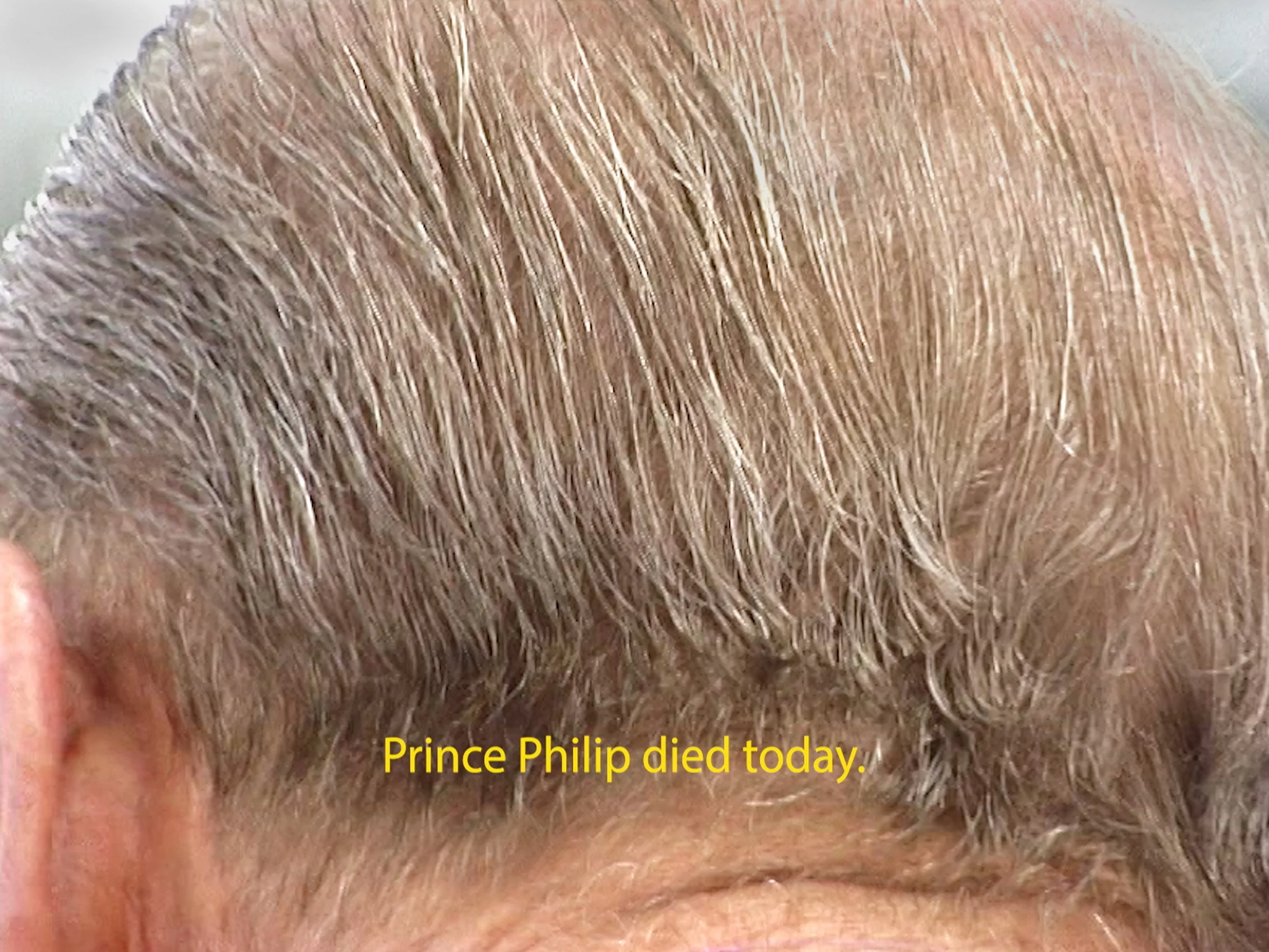
John Smith, Great Britain, 2021, 1', Slovenian video subtitles
A larger than life portrait of Prince Philip, His Royal Highness the Duke of Edinburgh, recorded in 2002 and completed on the day of his death, April 9th 2021.
Unusual Red cardigan
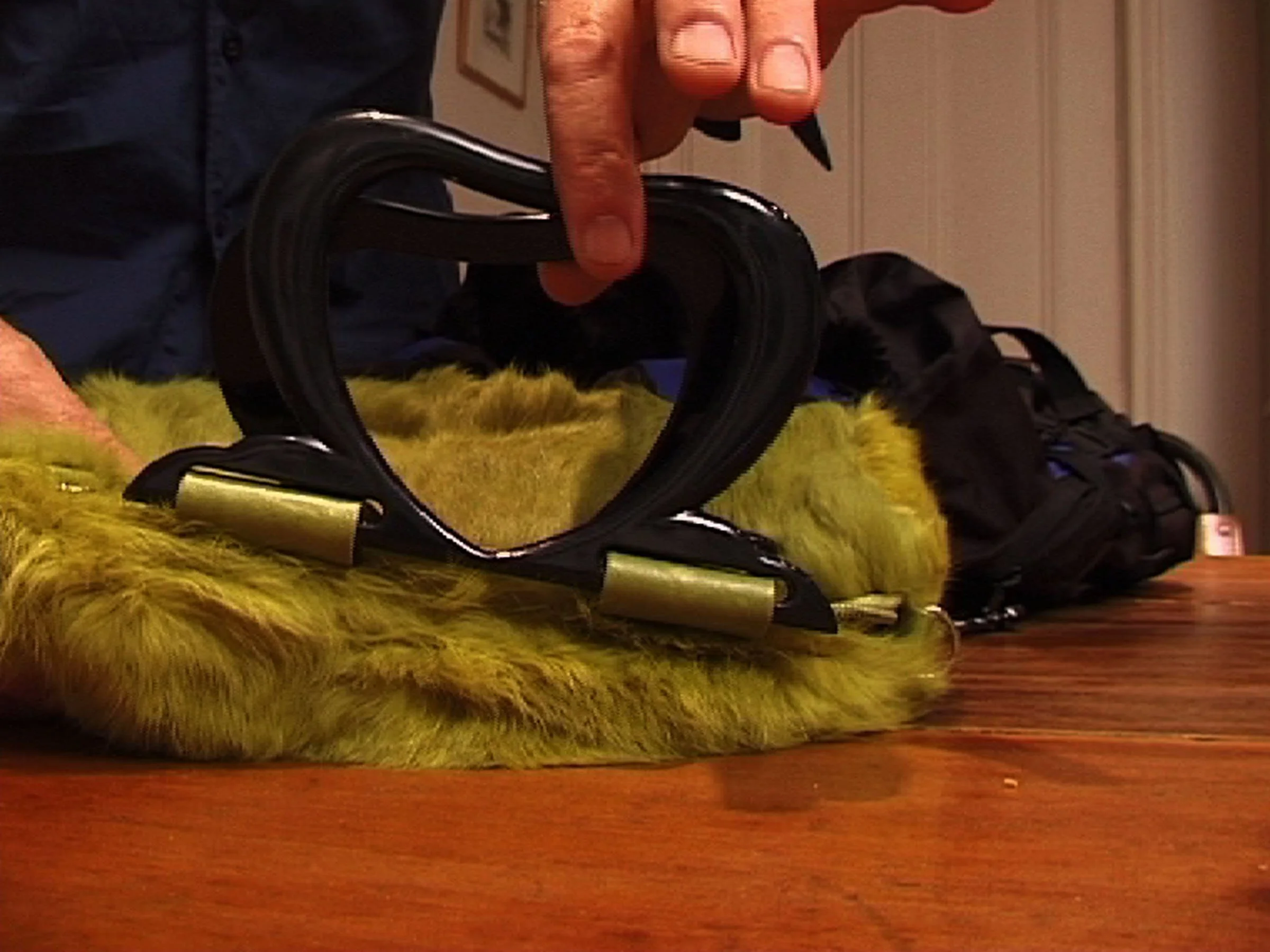
John Smith, Great Britain, 2011, 12'46'', Slovenian video subtitles
The discovery of a familiar item for sale on eBay triggers obsessive speculation about the seller’s identity.
The Kiss
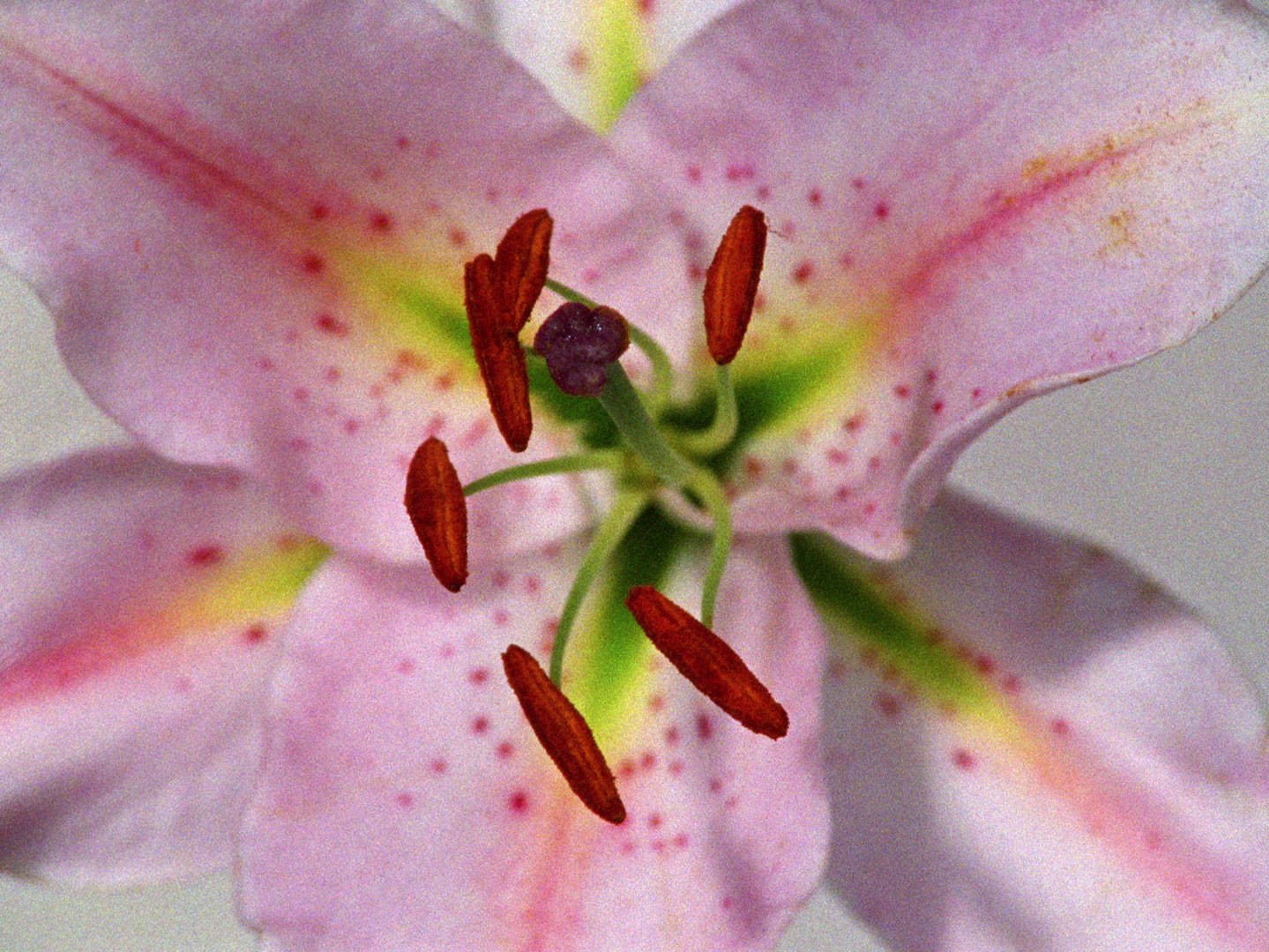
Ian Bourn, John Smith, Great Britain, 1999, 5', no dialogue
A depiction of the forced development of a hothouse flower. Organic growth is progressively overtaken by a more sinister, mechanical process.
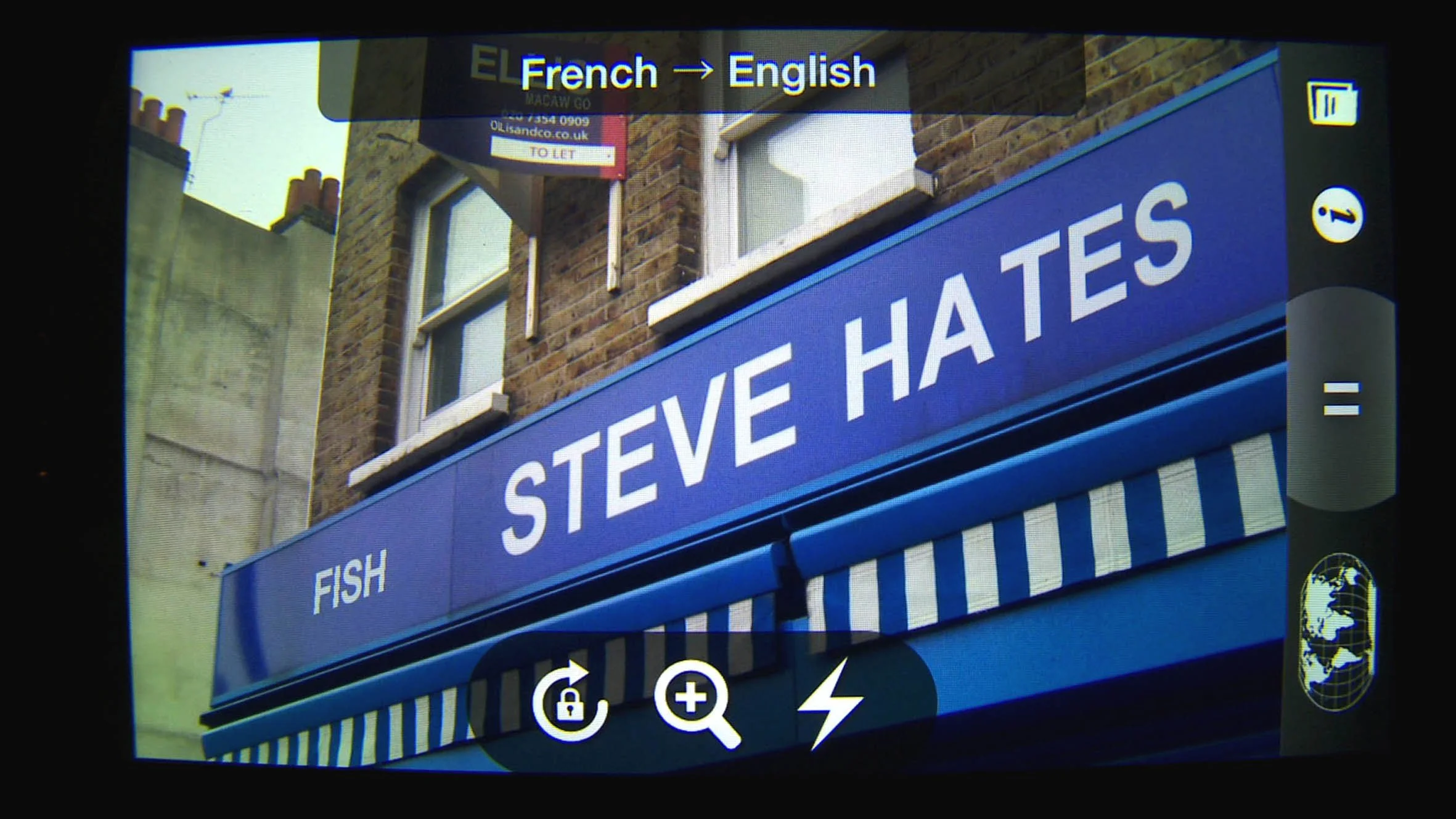
Steve Hates Fish
John Smith, Great Britain, 2015, 4'52'', Slovenian video subtitles
Filmed directly from the screen of a smartphone using a language translator app that has been told to translate from French into English, Steve Hates Fish deliberately confuses the software by instructing it to interpret the English signage in a busy London shopping street. In an environment overloaded with information the signs run riot as the restless software does its best to fulfil its task, looking for French words to translate in places where there are none.
Jour de Fête
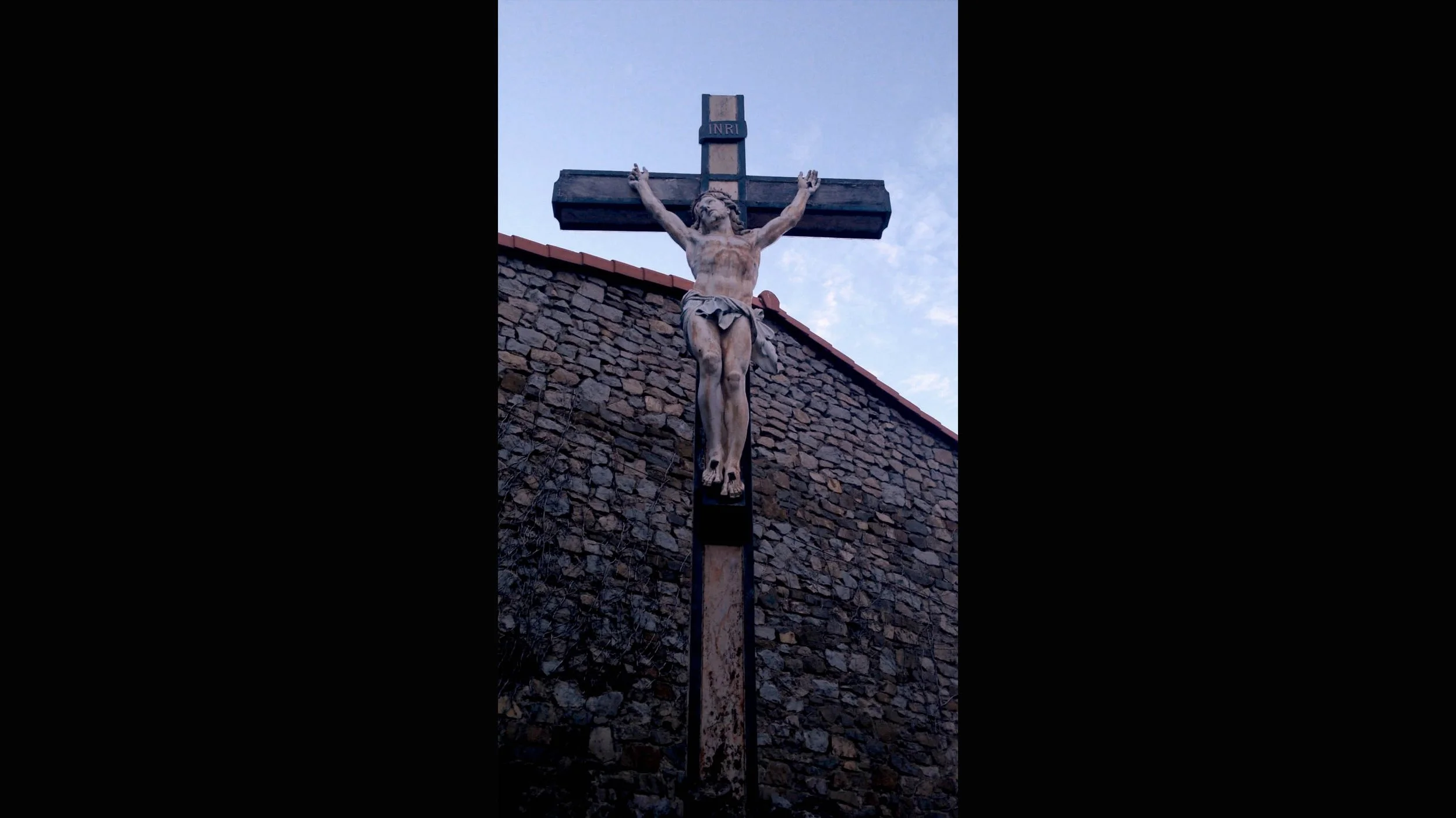
John Smith, Great Britain, 2017, 1'12'', no dialogue
If anyone slaps you on the right cheek, turn to them the other cheek also. (Matthew 5:38-40)
Blight
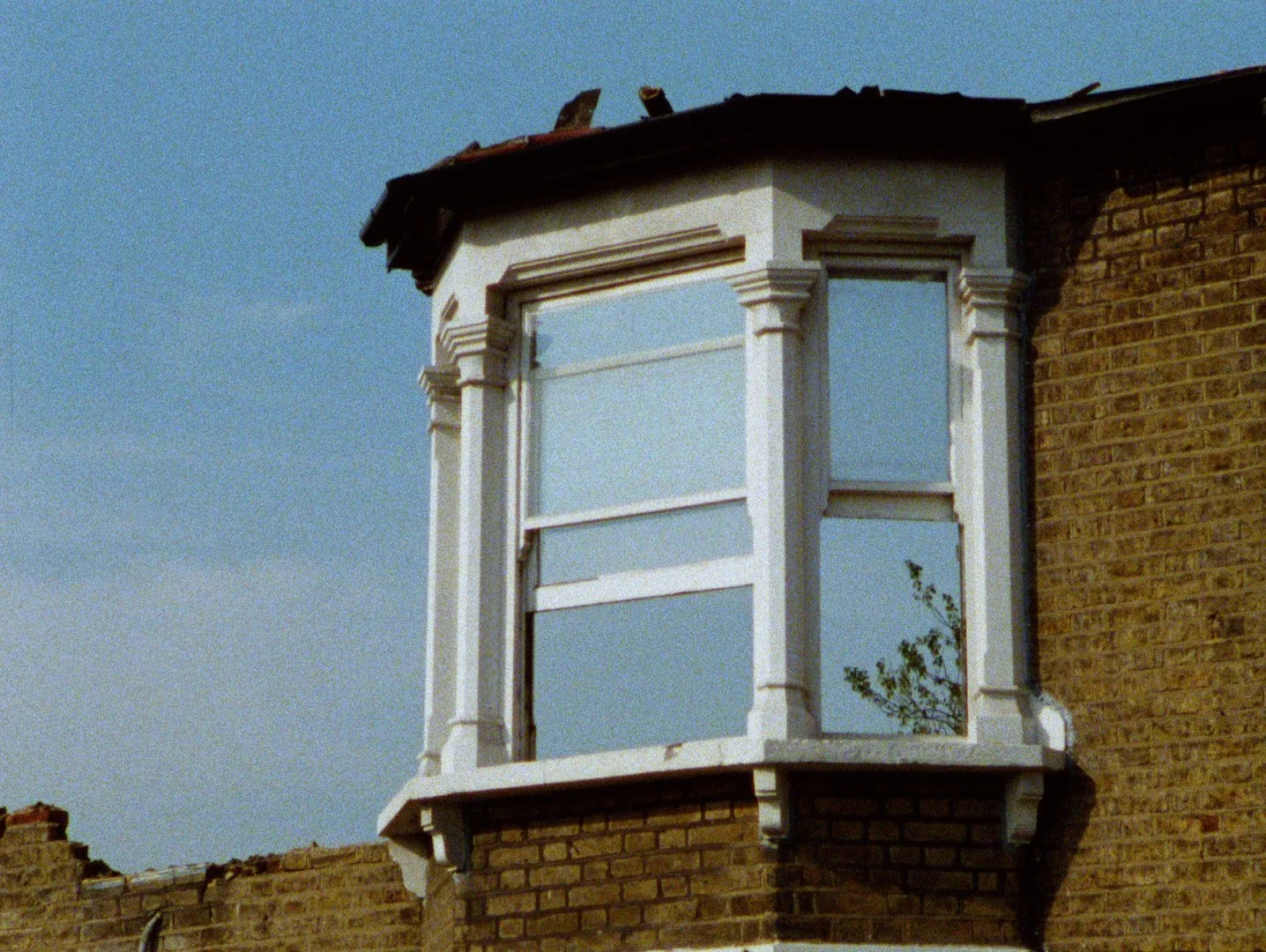
John Smith, Great Britain, 1994–96, 14', Slovenian video subtitles
Blight was made in collaboration with the composer Jocelyn Pook. It revolves around the building of the M11 Link Road in East London, which provoked a long and bitter campaign by local residents to protect their homes from demolition. The images in the film record some of the changes which occurred in the area over a two-year period, from the demolition of houses through to the start of motorway building work. The soundtrack incorporates natural sounds associated with these events together with speech fragments taken from recorded conversations with local people. Taking these actualities as its starting point, Blight exploits the ambiguities of its material to create its own metaphorical fictions. The emotive power of Jocelyn Pook’s music is used in the film to overtly aid this invention, investing mundane images with dramatic significance.
Dirty Pictures (Hotel Diaries 6)

John Smith, Palestine/Great Britain, 2007, 14'28'', Slovenian video subtitles
Palestine, April 15th/16th, 2007. Moving from one hotel in Bethlehem to another in East Jerusalem, the filmmaker encounters a series of problems involving a ceiling, a video camera and the Israeli occupation of Palestine.
Dad's Stick
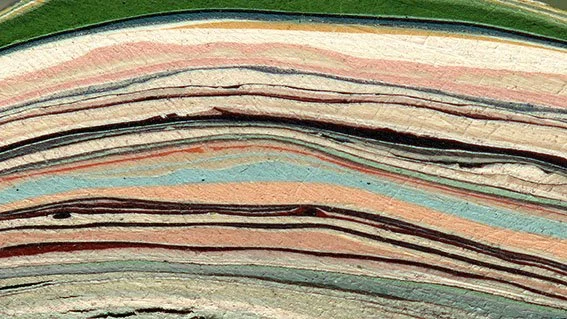
John Smith, Great Britain, 2012, 4'53'', Slovenian video subtitles
Dad's Stick features three well-used objects that were shown to the filmmaker by his father shortly before he died. Two of these were so steeped in history that their original forms and functions were almost completely obscured. The third object seemed to be instantly recognizable, but it turned out to be something else entirely. Focusing on these ambiguous artifacts and events relating to their history, Dad's Stick creates a dialogue between abstraction and literal meaning, exploring the contradictions of memory to hint at the character of “a perfectionist with a steady hand”.

Being John Smith
John Smith, Great Britain, 2024, 26'45'', Slovenian video subtitles
After enduring many decades of embarrassment and discomfort, the artist finally admits that possessing the most common name in the English-speaking world has had a profound impact on his sense of self. Combining fragments of autobiography with interjections concerning confidence, self-doubt, fame, and the state of the world, Being John Smith takes us on a confessional journey that addresses universal dilemmas as well as personal ones, revealing just how important a name can be.
Screening in the presence of the author.
ABOUT THE AUTHOR:

John Smith (1952) studied film at the Royal College of Art. Inspired during his formative years by conceptual art and structural film, but also fascinated by the immersive power of narrative and the spoken word, he has developed a body of work that deftly subverts the perceived boundaries between documentary, fiction, representation and abstraction. Smith's work has been widely shown in independent cinemas and art galleries around the world and awarded major prizes at many international film festivals. His work is held in numerous collections including Tate Gallery,London; Arts Council England; Museum of Modern Art, New York; Museum Sztuki, Lodz; Ville de Genève, Switzerland and Kunstmuseum Magdeburg, Germany. John Smith is Emeritus Professor of Fine Art at the University of East London. He lives and works in London and Aude.