
BECOMING IMAGE //
BECOMING IMAGE //
Becoming Image explores the blurring boundaries between lived realities and digital images, tracing the feedback loops between visual representation and algorithmic operations. Through short films, video art, and video essays, the screenings reveal how the construction of identities, experiences, and environments is increasingly governed by the image, and by the computational systems that produce it. The works gathered here ask what it means to exist in a world where visibility is conditional: where images do not merely reflect reality but actively determine what is allowed to exist and who is permitted to have a voice.
Marco De Mutiis
Precursing
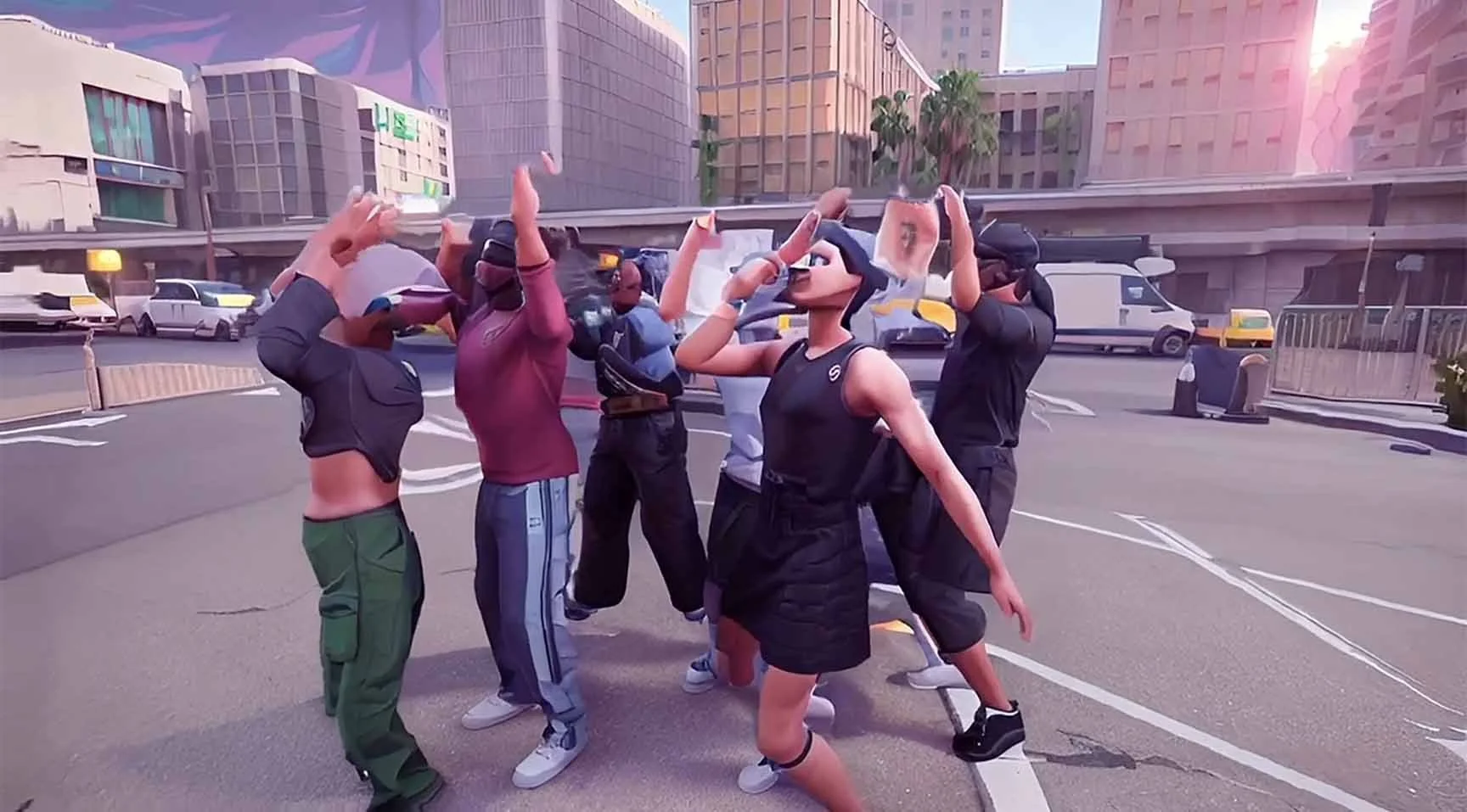
Nina Davies, Canada/Great Britain, 2024, digital format, colour, 10', Slovenian video subtitles
Precursing explores a world shaped by rapidly accelerating technologies, where systems designed to predict the future are increasingly embedded in everyday life. From finance and law to transport and insurance, artificial intelligence is relied upon to model outcomes with precision—yet similar technologies also surface in unexpected spaces, from social media algorithms to the uncanny detection of “ghosts.” While some of these systems depend on rigorous, verifiable data, others operate within looser, more speculative frameworks.
Video Games That Don't Exist #12, #10, #11
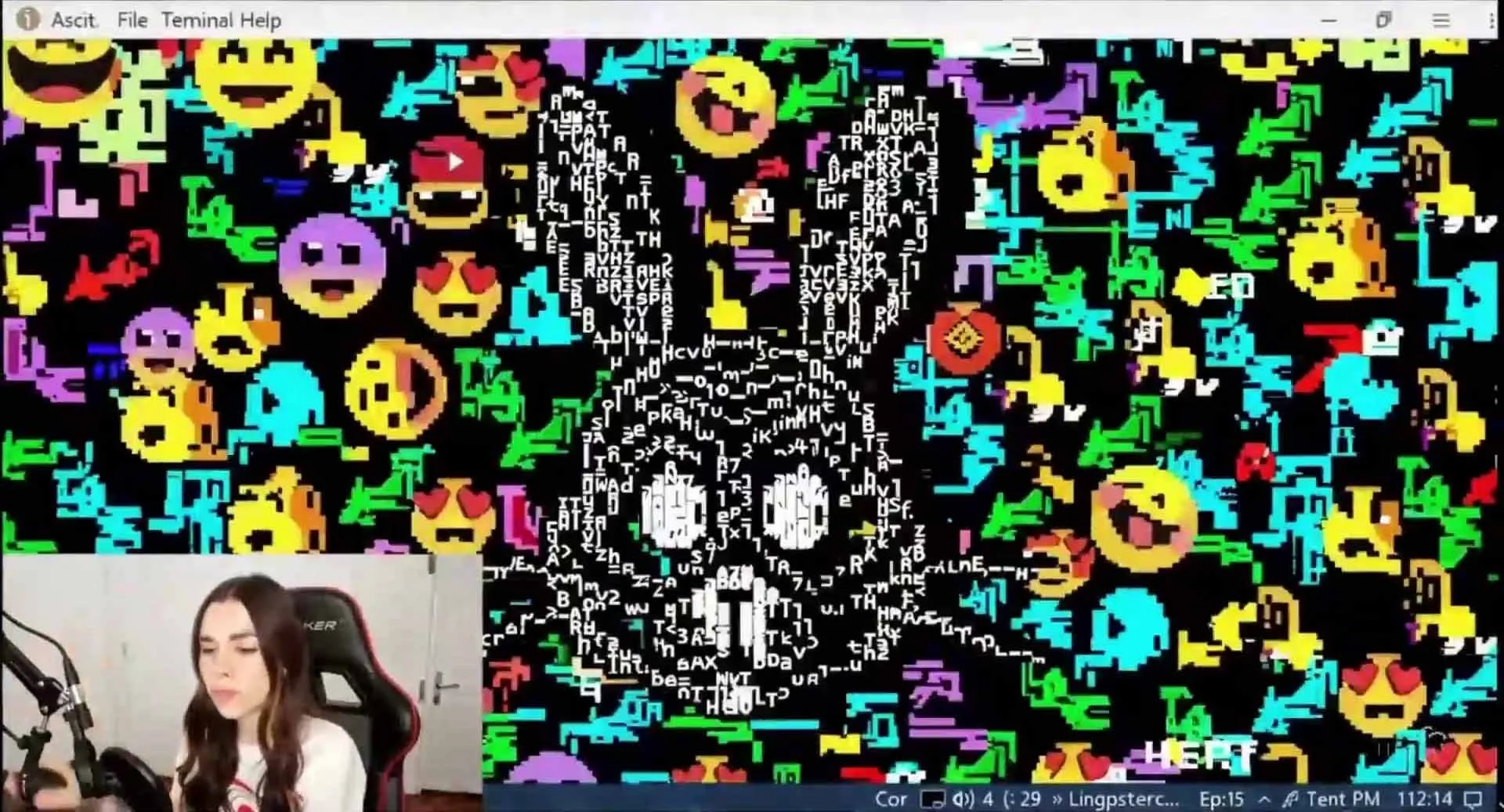
Kieran Nolan, Ireland, 2025, digital format, colour, 0'40'', no dialogue
Kieran Nolan, Ireland, 2025, digital format, colour, 0'42'', Slovenian video subtitles
Kieran Nolan, Ireland, 2025, digital format, colour, 1'25'', no dialogue
AI Machinima uses generative AI to create video scenes in the style of immersive 3D game environments, instead of directly using a game engine for their production. They are “paratexts sans texts” (Bittanti 2025). Video Game That Don’t Exist is a series of vignettes and short stories edited together from 5 second clips generated with text prompts in Open AI’s Sora (2024). The online video training base of the AI model is revealed through unintended extra details, for example the superimposing of game streamers into the scene. Gen AI’s current limits are also exposed through animation glitches where movements blend and contort in an unpredictable manner.
Rather than attempt to edit out these anomalies, AI’s unpredictable factors are embraced. In Video Games That Don’t Exist we see a mix of the familiar and the absurd channeled through the aesthetic constraints of Sora’s training data, as humans and farm vehicles merge and dislocate akin to the atoms of the old man and his bicycle from Flann O’ Brien's The Third Policeman (1967). Sora’s linguistically agnostic text sometimes makes partial sense, like a type of AI Esperanto, contributing a surreal language neutral layer. Borrowing from the philosophy of circuit bending pioneer Reed Ghazala, these accidental glitches aren’t considered bugs in the context of Video Games That Don’t Exist, but an integral feature of the work.
My Soul Gem Is Dull Color

Eriko Miyata, Japan/Switzerland, 2025, digital format, colour, 1'58'', no dialogue
In Japan, there exists a method that blends military themes with pop culture elements. This approach did not develop as a military strategy but rather as a genre within subculture. Meanwhile, a societal phenomenon is currently unfolding where real military organizations are incorporating the aesthetics of pop culture. A representative example of this is the influence of the game Kantai Collection (Kancolle). This game has had a significant impact, extending to the sale of themed food products in convenience stores, the creation of an anime series, and collaborative events with the Japan Self-Defense Forces. Within this subculture,there is pronounced tendency to anthropomorphize weapons as female characters, reflecting a distinct bias. Children growing up in Japan are regularly exposed to magical girl anime stories that depict young girls who need to be “saved” or “rescued.” However, escaping the signals directly tied to military influence, as well as the male gaze and the violence it entails, proves extremely difficult. This work aims to visualize these societal dynamics and the perspectives directed toward women.
Elephant Juice
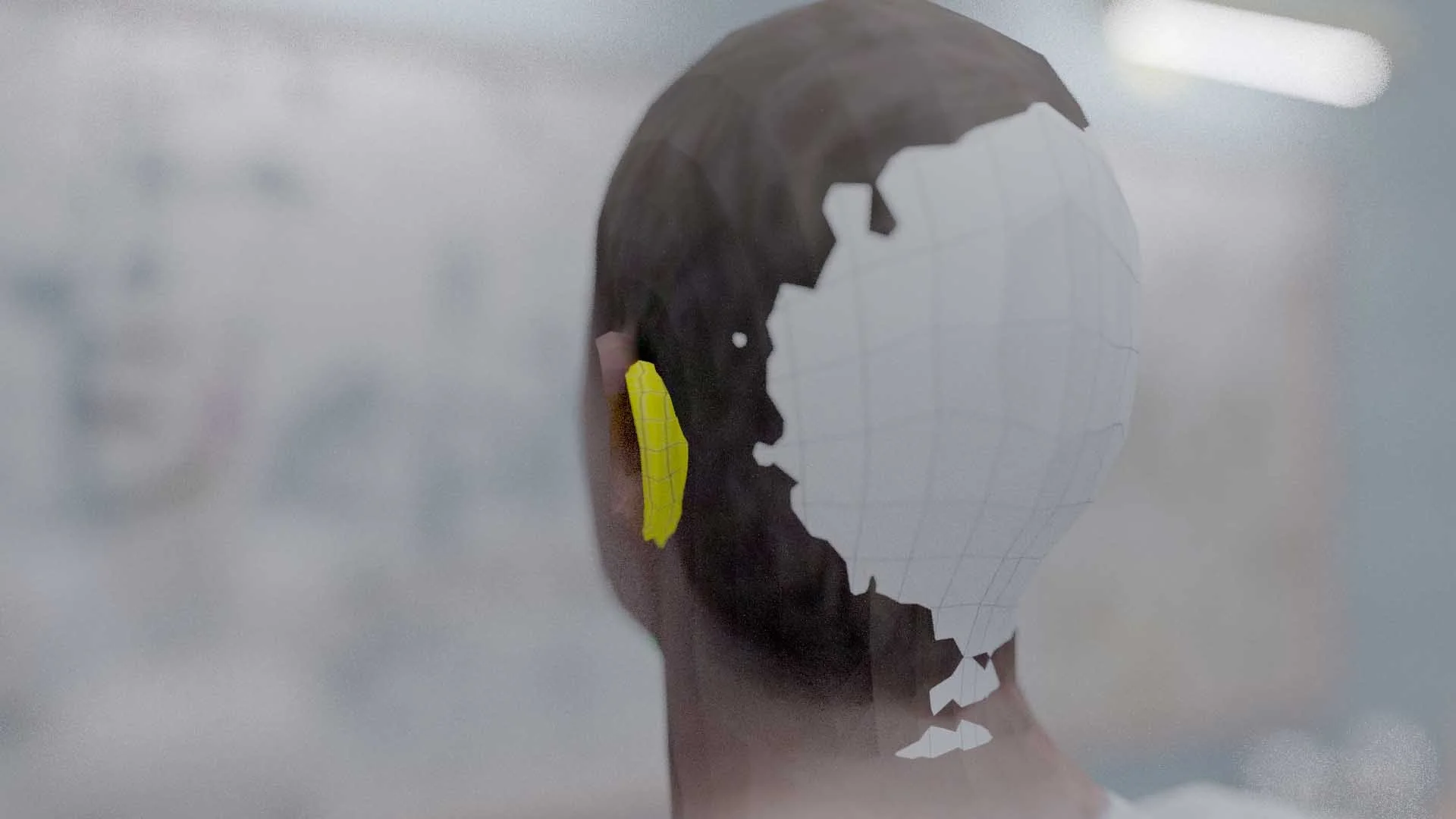
Simone C. Niquille, Switzerland, 2020, digital format, colour, 8'45'', Slovenian video subtitles
In the short film Elephant Juice the bat contemplates: “Our own experience provides the basic material for our perception of the world, which is therefore limited.” Modelled after philosopher Thomas Nagel's seminal essay What Is It Like To Be A Bat?, the film's narrator paraphrases this passage to ponder on the probability of human built computer vision systems ever surpassing their maker's subjective worldview.
New Old Homeland
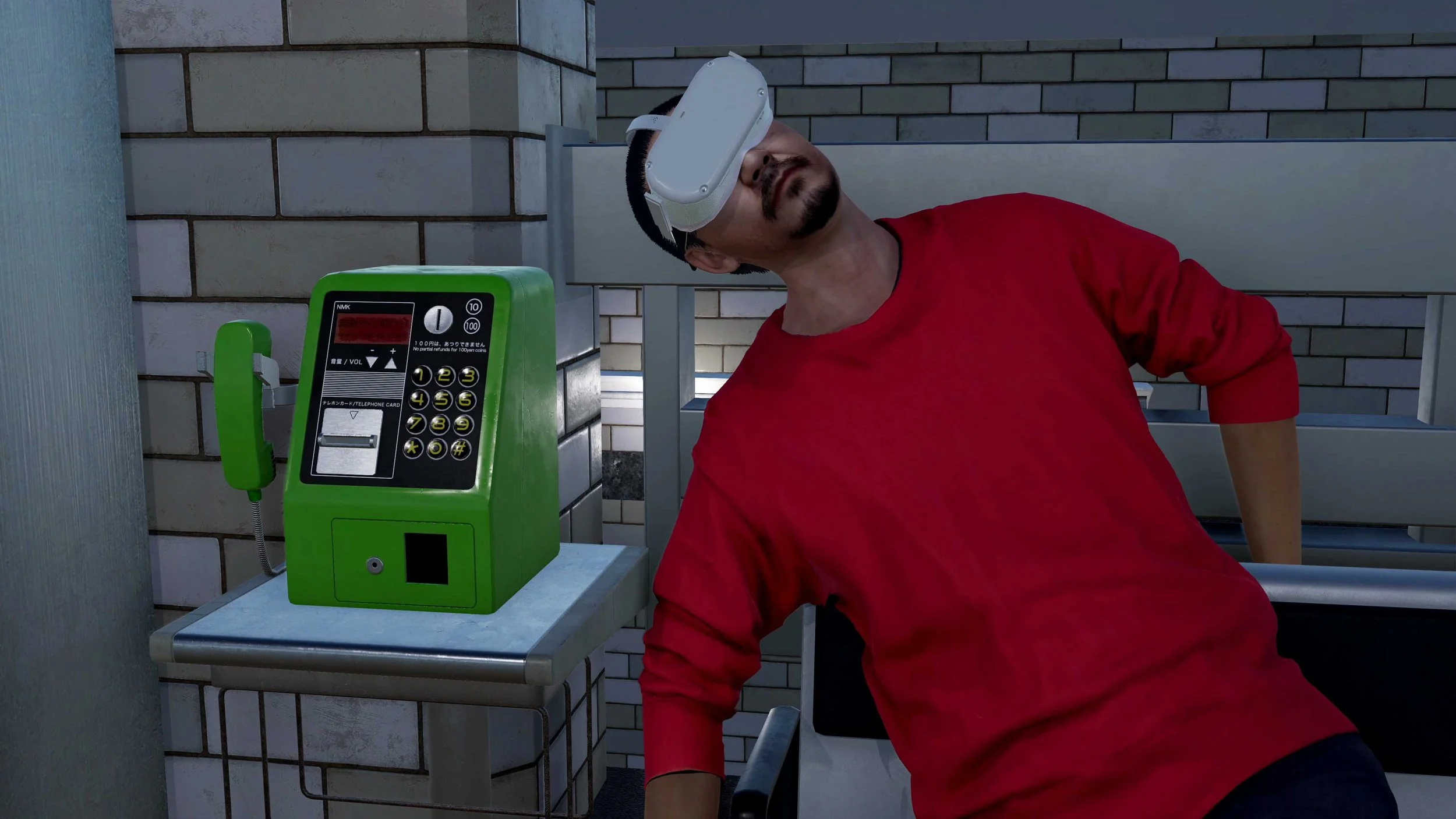
Akihiko Taniguchi, Japan, 2026, digital format, colour, 25', Slovenian video subtitles
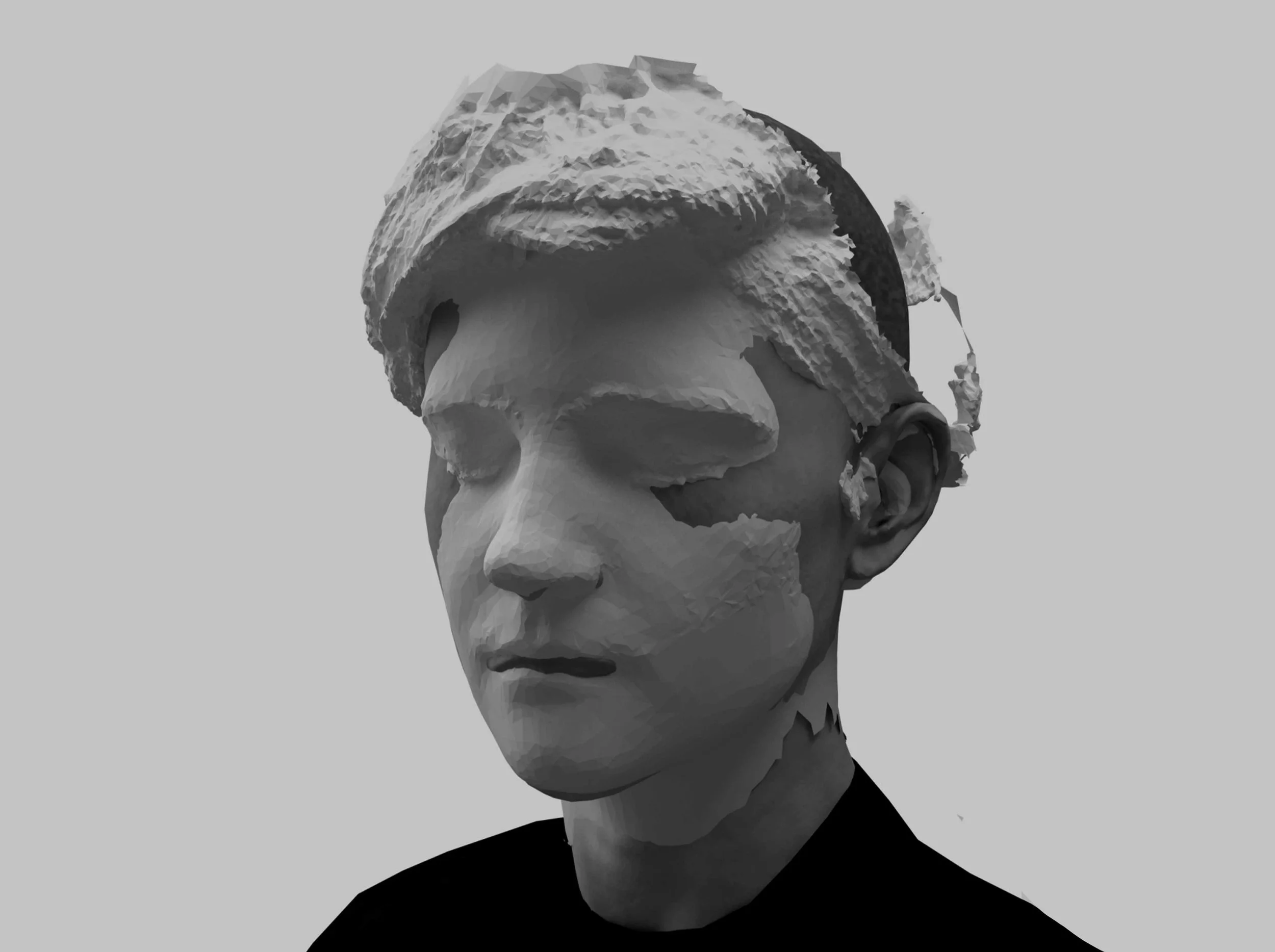
New Old Homeland is a digital work by Taniguchi that probes the shifting concept of “homeland” in a networked era. Created in Unity with the artist’s 3D-scanned avatar, the film explores the intersection of virtual space and physical belonging. It proposes a profound paradox: homeland is difficult to recognize from within, felt sharply only through distance or loss, where it feels both fabricated and emotionally urgent. Taniguchi mirrors this experience through the mechanics of game engines—where unrendered spaces and copyable objects create a structural mixture of persuasive realism and constitutive absence. Through this lens, the film establishes a new grammar for belonging in the realm of the unreal.
Homecoming
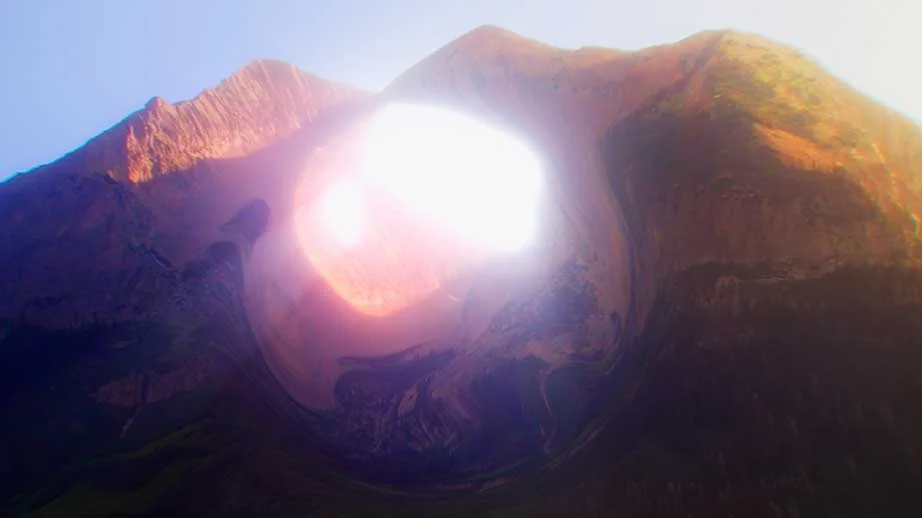
Mark Dorf, USA, 2025, digital format, colour, 16'17'', Slovenian video subtitles
Homecoming is a 16-minute cinematic work that reimagines Homer’s The Odyssey as a contemporary meditation on home and belonging, in a time, and to a planet, where ‘home’ feels increasingly intangible. Blending live-action footage from high altitude forests and meadows of the Rocky Mountains, digital 2D and 3D animation, internet imagery, and immersive sound, the film explores how individualized algorithmic technologies and environmental uncertainty have fractured contemporary perceptions of reality and planetary home. Through a turbulent visual journey, ‘Homecoming’ reflects on memory, displacement, and the confronting the impossibility of returning to a home that no longer exists—or perhaps never did.
Part of Tactics&Practice #17: Becoming Image
Curator: Marco De Mutiis
In collaboration with Aksioma - Institute for Contemporary Art Ljubljana.
ABOUT THE AUTHORS:
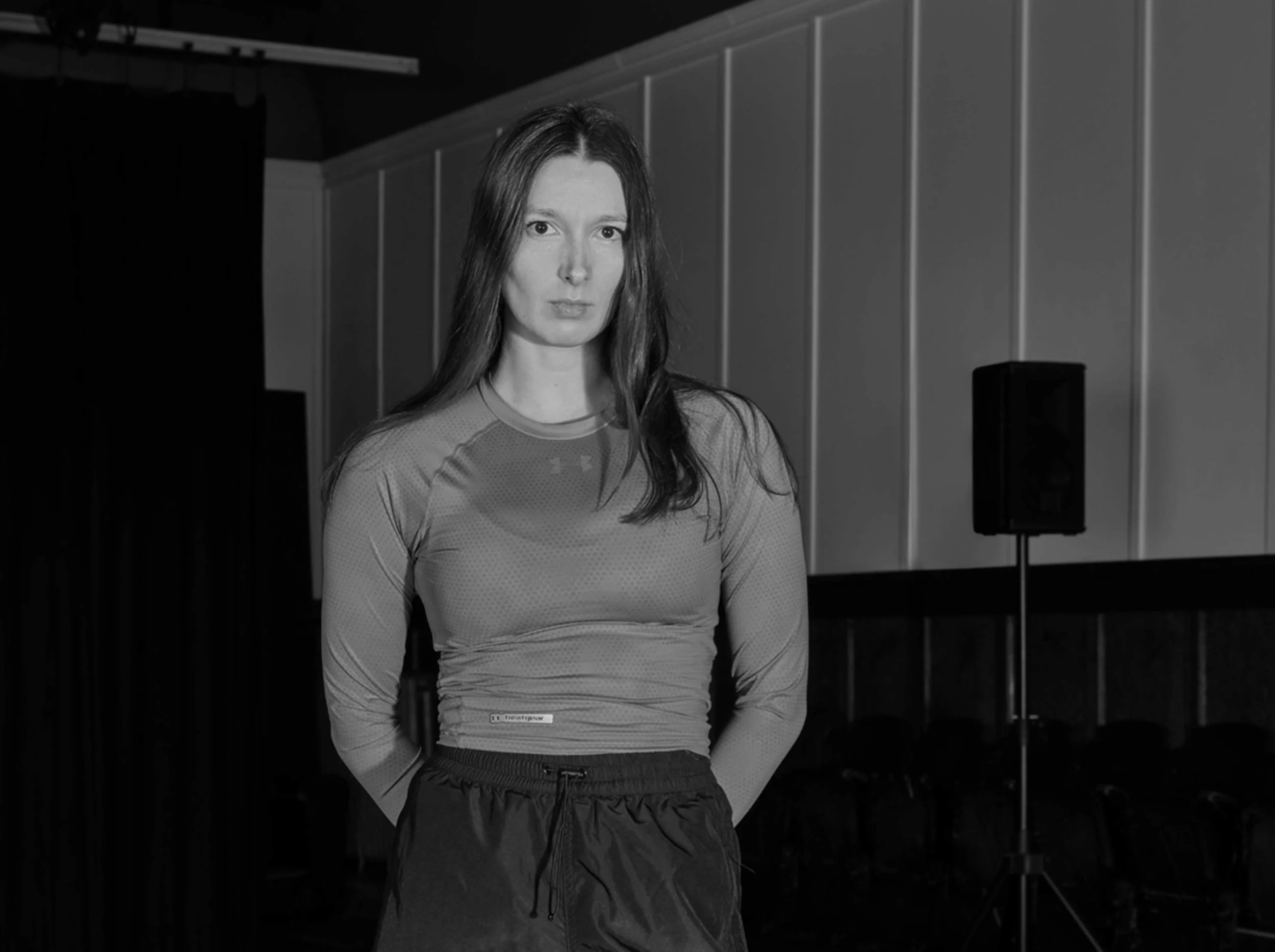
Nina Davies is a Canadian-British artist who considers the present moment through observing dance in popular culture and how it is disseminated, circulated, made, and consumed. Previous research projects have included the recent commodification of the dancing body on digital platforms and rethinking dances of today as traditional dances of the future. Her work explores how popular dance trends mimic digital misrepresentations of the human body, using glitchy and repetitive movement as a choreographic vernacular that tests how bodies are read, captured, and circulated by technological systems. Oscillating between the use of fiction and non-fiction, her work helps build new critical frameworks for engaging with dance practices. Her work has recently been shown at venues such as Tate Britain, V&A Museum, Somerset House, and the Photographers Gallery. In 2021, she co-founded Future Artefacts FM, an artist-run program that showcases artists working with speculative fiction for broadcast.

Kieran Nolan is an interdisciplinary artist, researcher, and lecturer working across interactive art, games, and creative technologies. He is Co-Director of the Creative Arts Research Centre at Dundalk Institute of Technology (DkIT). His practice spans interactive art, game-based media, and digital visual culture, including AI-driven machinima, immersive networked XR, graffiti archiving in and through video games, and platform preservation. He is WG1 Lead for COST Action 21141 (Grassroots of Digital Europe) and Co-President of the History of Games International Conference. He is also co-editor of the upcoming collected edition Silicon Dawn: Histories and Cultures of Creative Computing in Europe (1970-2000) (De Gruyter Brill, 2026).

Akihiko Taniguchi is a media artist and an Associate Professor in the Media Arts Course, Department of Information Design at Tama Art University. His multidisciplinary practice spans media art, net art, video, and sculpture.
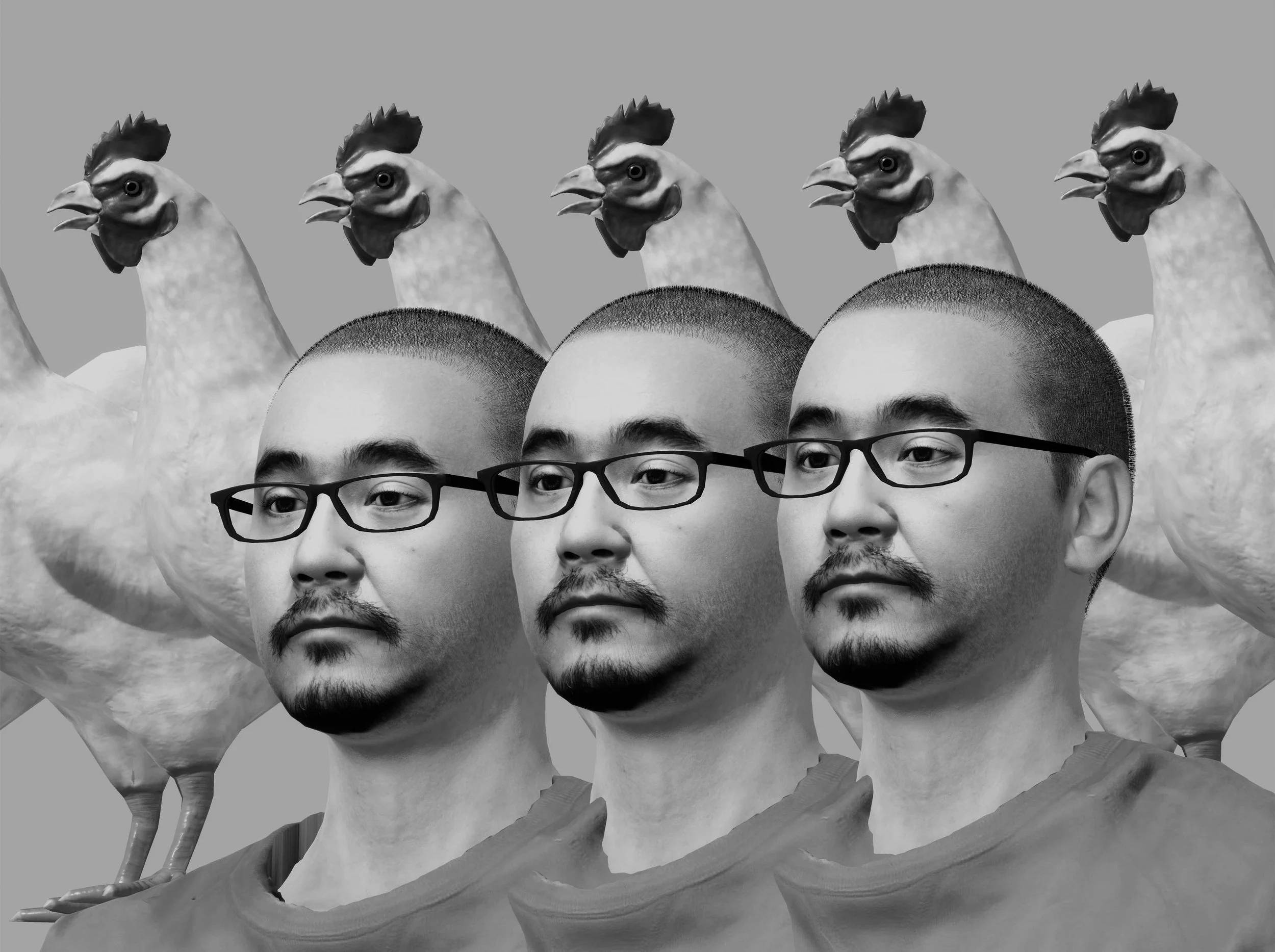
Simone C Niquille is a designer and researcher whose work investigates how computation functions as a contemporary optical system. Working with vision technologies such as computer vision, 3D animation, computational photography, and synthetic training datasets, their practice examines how images no longer simply represent the world but actively organise perception, legibility, and reality itself. Engaging these systems from within, Niquille critiques machine learning as a tool for stabilising assumptions and instrumentalising difference, advocating instead for non-binary technological imaginaries. They teach and conduct research across design, architecture, and critical software and are currently a PhD researcher within the ARTILACS graduate school at HFBK Hamburg. Their work has been exhibited and published internationally.
Eriko Miyata is a Japanese-born artist and photographer based in Switzerland, currently completed a Master’s in Photography at ECAL (2023–2025). Previously, she earned a Master’s in Fine Arts at Zurich University of the Arts (2018–2020) and a Bachelor’s in Intermedia Art at Tokyo University of the Arts (2012–2017). Her work explores contemporary photographic and multimedia practices, often combining digital and analog approaches to question perception, memory, and visual storytelling. She has received multiple scholarships and awards, such as the Pola Foundation Scholarship for Young Artists Abroad, the Ina Nobuo Prize, and was a finalist for Prix Photoforum. She has also held solo and group exhibitions across Europe and Asia, reflecting a research-driven and experimental approach to photography and visual media.

Mark Dorf is a New York-based artist working across photography, video, digital media, and sculpture. Engaging collaboratively with ecologists and technologists, Dorf’s work questions perceptions of what Western culture often terms “Nature”. His images and objects examine how design, image culture, technology, and science shape expectations of the “Natural” world, while engaging deeply with the digital processes behind their production. By making the marks of these often hidden digital processes visible, Dorf’s work reflects an awareness of its own production, inviting viewers to consider how digital materials shape their own lives and subsequently alter their understanding of the “Natural” world and beyond.